



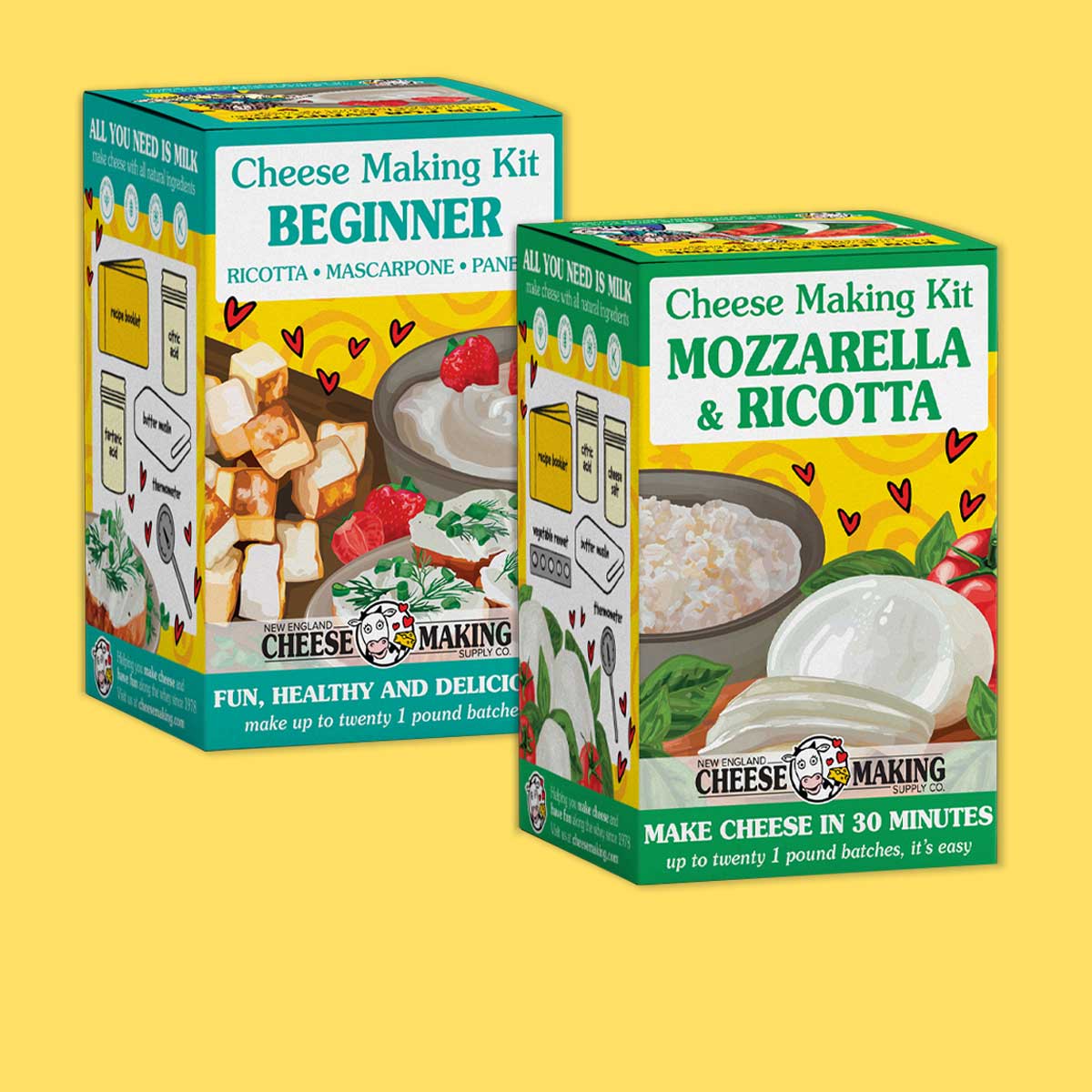



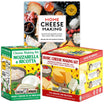
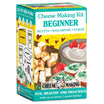

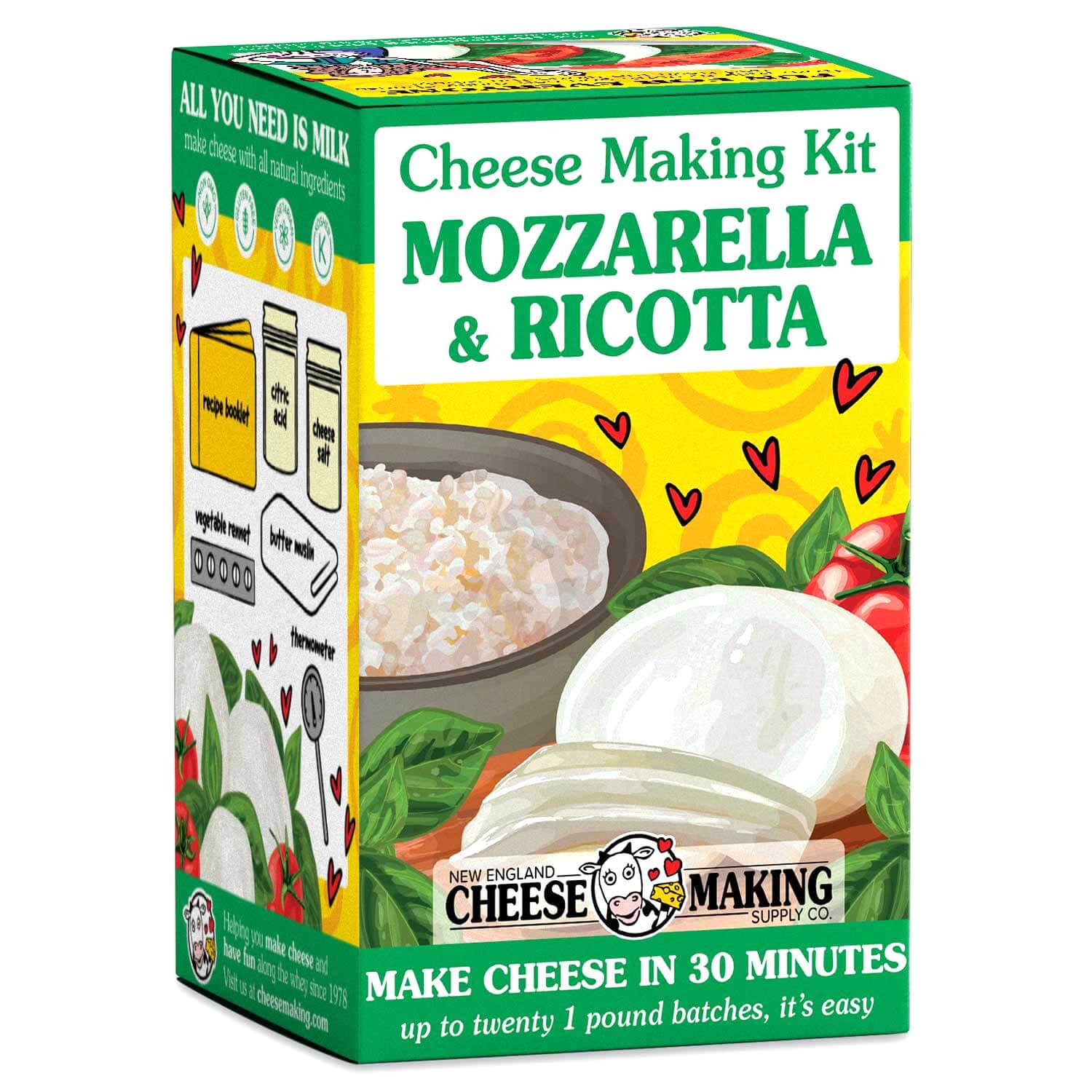
30 Minute Mozzarella & Ricotta Kit

K2 Price: $24.95
Quantity
Availability: In Stock
Usually ships In 2-3 Business Days

This kit can be purchased by itself or as part of the Starter Special (Item# AGSD). Kit contains enough ingredients to make Mozzarella 30 times using our own easy recipe! The whole process takes ±30 minutes!!! For those of you who have goat's milk, this recipe works like a charm. Our Mozzarella recipe may also be made with powdered milk (recipe included)! To see the actual recipe, click on the 'More Information" tab above. Recipe booklet also includes recipe for quick and easy Ricotta, as well as a small variety of recipes using these two cheeses.

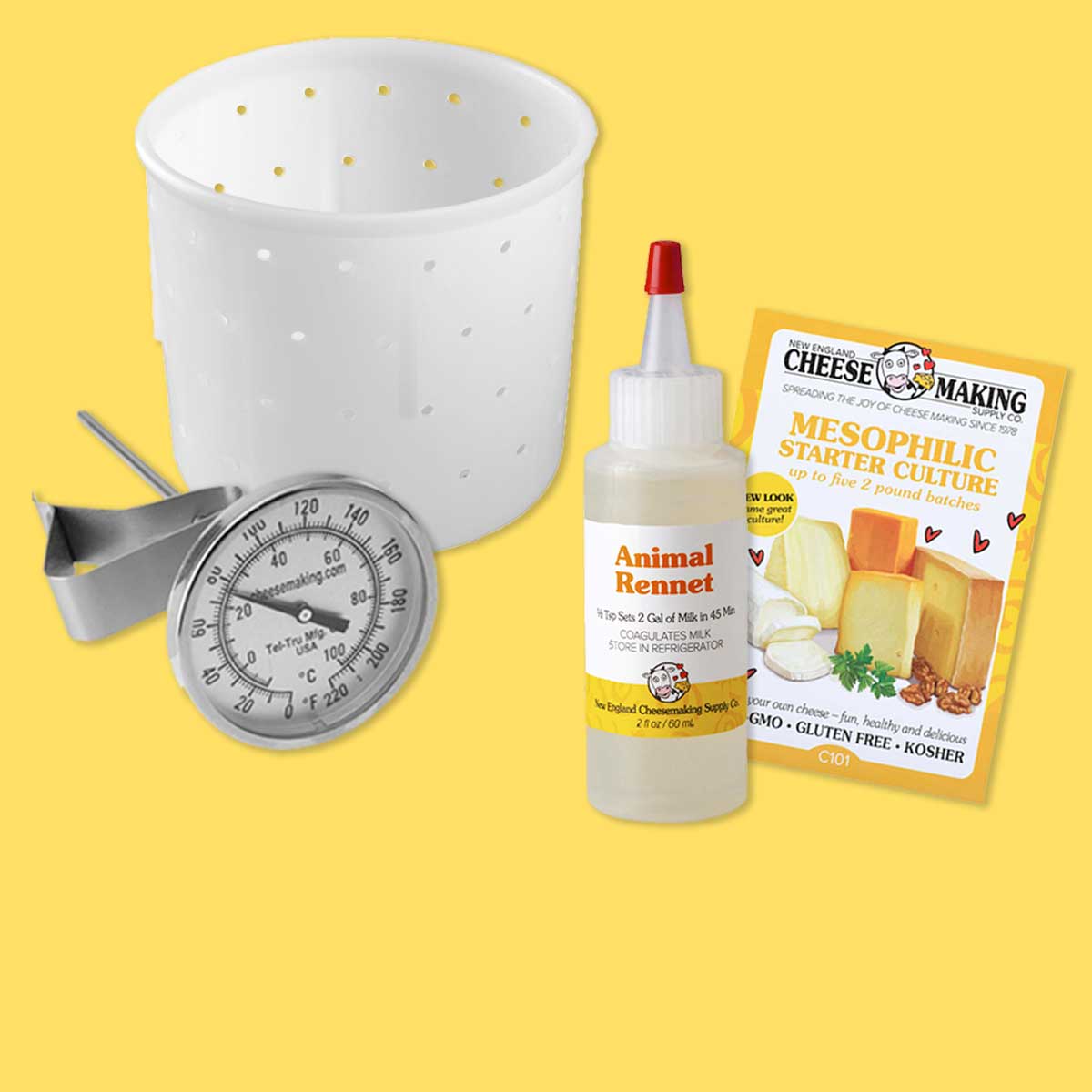
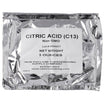
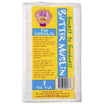
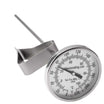
CONTENTS: Dairy Thermometer (E3), Butter Muslin (U2), Citric Acid (C13), Vegetable Rennet Tablets (R4), Cheese Salt (S1) and Recipe Booklet

USAGE: Use to make Mozzarella and Ricotta Cheese in the comfort of your own kitchen!!!

STORAGE: Kit will store at room temperature up to 1 year. Will keep even longer if rennet tablets are stored in the freezer. Once opened, store  citric acid and salt in well sealed containers in a cool, dry place. They will last indefinitely.

DISCOUNT: Order 12 or more of our Mozzarella and Ricotta Kits and get them for $12.48/kit. That's half price!!!!

Click HEREto see answers to your questions on Mozzarella


Directions for Ricki's 30 Minute Mozzarella Magic

Note: Buying milk for Mozzarella
The real problem is that milk is being shipped cross country after being processed by huge processing plants .. in order to do this the milk must be processed at higher temps and then held at cold temps for long periods while shipping long distances to markets .. this is especially true for our so called "organic milks" ... many of the milks not labeled as UP are in fact heat and cold damaged and will not make a proper cheese curd
Our best advice to date is to buy a LOCAL milk
one that has not had to have the extensive "LongHaul" treatment
For more details on finding a milk that works for you click here

If you have any questions on your milk quality
or your curd does not form a nice curd
like you see in photos 4-8 then click
here for details .

If you would like to try this recipe without the MicroWave
we provide this option .

Click on any image to enlarge it..use Back Button to return !

First we add Citric Acid
to cold milk
then heat slowly to 90F
If having problems with curd forming please see note below
then add rennet, stir for 30 sec ... turn heat to 'Lo' then let set quietly in 3-5 min a firm curd forms, note clear whey separating from the curd
now use a knife to cut
1 inch squares in curd surface to the bottom
note the greenish yellow whey forming in the cut and how clear it is
transfer the curd to a colander or bowl using a slotted spoon
notice how the curd is beginning to get firmer as the whey drains
continue separating the curd and notice the color of the whey
drain the whey from the curd while gently pressing to aid whey runoff
using a heat proof bowl microwave on 'Hi' for 1 min.. notice the whey..
...now pour it off
knead and reheat for 30 sec, repeat if needed until the curd is almost too hot to handle (135F)
and now the fun begins..
knead the curd as you would bread dough
remove the curd from the bowl and continue kneading .. return it to the microwave if needed
at this point, if hot enough, it will begin to stretch ...
... and stretch ...
... and stretch some more
this is what makes it Mozzarella
Well...
ain't we having fun now... ....Ooops !
now knead it back into a big ball until it is smooth and shiny like this
soo.. now you know why
they call her the
--------------------------
"CHEESE QUEEN"


How to make this cheese :
The Milk:
Make sure the milk you use for this cheese is
NOT
ULTRA- PASTEURIZED

--Homogenized milk will work fine.
--Fresh farm milk will also work well but we encourage you to try with
1 gallon of store bought whole milk first.
--Low fat milk will work but the cheese will be drier and less flavorful

You will need:
--A 6 to 8 quart stainless steel pot. Aluminum or cast iron will not work.
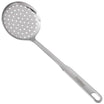
--A stainless steel or strong plastic slotted spoon.
--A two quart microwave safe mixing bowl
--measuring spoons
--A thermometer which will clearly read between 80 - 120 degrees F.

Prepare your work area:
Do not prepare any other food while you are making cheese.
Put all food products away
Move all sponges, cloths and dirty towels away from your work surface, wipe your sink and stove with soap and water.
Finally use your antibacterial cleaner to wipe down all surfaces.

Process:
crush 1/4 tablet of rennet and dissolve in 1/4 cup of cool unchlorinated water and set aside to use later.

Add 1.5--2 tsp. of citric acid to 1 cup cold waterand stir well.
Now pour cold milk into your pot. Then add the citric acid in a thin stream as you briskly stir the cold milk. This will bring the milk to the proper acidity to stretch well later. Next Heat this milk to 90F As you approach 90F you may notice your milk beginning to curdle slightly due to acidity and temp.
...NOTE... if having problems with milk forming a proper curd you may need to increase this temp to 95 or even 100F ...

When at 90F add your rennet (which you prepared in previous step) to the milk and stir in a top to bottom motion for 30-60 seconds
...then stop.

Now turn the heat off (it may continue to rise as high as 105For so)

Let the milk remain quiet for the next 3-5 minutes during which it will form a curd as seen in photos above. A longer set will result in a firmer curd.

Cut the curds into a 1" checkerboard pattern (as in photos above) and then scoop with a slotted sp0on into a heat proof bowl to be used in the microwave. (If the curd is too soft at this point let sit for another minute or so)
You will now press this curd gently with your hand, poring off as much whey as possible. Reserve this whey to use in cooking or making ricotta.

Next microwave the curd on HI for 1 minute. You will notice more whey has run out of the curd. Drain off all whey as you did before.Quickly work the cheese with a spoon or your hands until it is cool enough to touch (rubber gloves will help since the cheese is almost too hot to touch at this point)

Microwave 2 more times for 35 seconds each and repeat the kneading as in the last step. Drain all of the whey off as you go.

Knead quickly now as you would bread dough until it is smooth and shiny. Add salt near the finish.

At this point the cheese should be soft and pliable enough to stretch like taffy.

It is ready to eat when it cools.
Form it into a ball and drop into ice water to cool and refrigerate.
When cold you can wrap in plastic wrap and it will last for several days but is best when eaten fresh.

Option:
--A substitution of reconstituted dry milk and cream is very viable and is a great option if you can not find the right type of milk
--Lipase may be added to the milk to provide a typical italian cheese flavor
--If you want a softer texture, do not let the curd set as firm and work less when draining and kneading.. this will make a moister cheese.


What you may need :
Citric Acid
Rennet
Salt
Lipase

FREQUENTLY ASKED QUESTIONS AND GENERAL INFORMATION

Q. I was wondering how much milk it takes to yield one pound of mozzarella?

A. Depending on the final moisture of your curds, you will find that 1 gallon of milk yields about 1lb fo cheese.

Q. I made mozzarella yesterday with questionable results. I found it pretty easy even though very unfamiliar. I used organic milk that was not Ultra-pasteurized ( I talked to the dairy). I used your citric acid and liquid rennet diluted with filtered water. I used a thermometer and think I followed the steps correctly. The cheese possibly could have used a bit more salt but tasted okay.

But when I put it on top of pizza it baked up hard and hollow and didn't seem molten or "normal". It seemed a bit dry and stiff (trying to find the right words to describe it!). Do you have any ideas for me? I would appreciate any helpful advice. 

A. 
The problem here seems to be low moisture in your cheese. This is happening because the cheese is losing too much moisture as whey during the heating process. 

With pasteurized milk (not UP), just try to keep the cutting size larger and the temp and stirring times lower to hold more final moisture.

With fresh milk or raw milk this can be a problem but is easily resolved. Try cutting back on the rennet  temps to as low 87-88F and not heating much past 92-95F in the cutting/heating phase (instead of the 105F suggested). Also, minimal kneading and stretching will retain more moisture.  As you have discovered, dry cheese will not melt well and has a tendency to brown. 

                             
Q.
Do the mozzarella and ricotta recipes scale for double batched in proportion to the measures you give or is it best to produce smaller batches?

A. Yes, they scale up quite well. The only problem is the curd mass becomes quite large when stretching by hand and should be broken down accordingly. Larger masses of curd can also be frozen, then stretched when you are ready.

                             
Q. I am making mozzarella with raw milk and finding that they whey which separates form the curds (which are quite soft) is still very milky. Why is this and what can I do to get the right looking whey? Our ambient temperature is 85-90F.

A. This should be totally expected, especially with milks such as Jersey, since the protein complex just cannot hold all that cream in during the heating and stretching process. Standardized and pasteurized milk form the store does this much less.

                                    
Q. Can vinegar and junket be used to make mozzarella?

A. Vinegar may be used instead of citric acid, but the amounts used are variable and can only be determined through trial and error. The citric acid is a standardized element so we use that for our recipe. Actual rennet must be used with any acids used. Junket is not recommended as this is meant more for pudding and custards and will not give a firm enough curd. 

Q. I love mozzarella but I have a question. I form it into a ball and then put it in a container and put it in the fridge. Every single time it just spreads to the shape of the container which doesn't make it easy for slicing or presentation. I would also like to be able to make mozzarella balls (pearls). What am I doing wrong?

A. The problem is due to excess moisture before stretching the curd. The cheese will simply flow even at fridge temps. A drier cheese will hold its shape better and can be achieved by stirring the curds longer to release more of the whey before the final heating stage. Increasine the final temp to 105-110F may be even better for some milks. 

Q. Tonight I tried to make mozzarella and something went incredibly wrong! I used whole milk. I put the citric acid and water in the pot with the milk and stirred it in. I then began heating toward 90F. I had the flame on high (I am wondering if this is the problem). About 3 minutes later little brownish, blackish specks began showing up in the milk. There were more and more of them until I freaked out and immediately trashed the endeavor. Have you seen this before? Did I burn the milk because I had the heat too high?

A. Not a pretty picture here. What you have is scorched milk releasing from the bottom of the pot. Milk, with all of its proteins, needs a bit of care and attention when heating directly on the stove. We do this with a slower heat and a constant stirring. The scorched particles are not harmful but will affect the taste, and some protein damage has probably taken place so you can expect a lower yield. Try using a flame tamer (even for electric burners) or a heavy bottom pot for your next attempt.

Q. I am interested in making mozzarella having just read the chapter on lactose intolerance and homemade cheese in “Animal, Vegetable, Miracle”, which references you! I am slightly confused, however. She explained that cheese which uses bacteria is different from commercially made cheese which uses acid.
I see the first thing added to the milk in your recipe is citric acid. Which of the two aforementioned processes is that? Does citric acid foster the growth of bacteria which will eat the lactose?

A. There are two ways to provide acidity for mozzarella. Adding the citric acid is done in much of the commercially made mozzarella as well as in Ricki’s 30 Minute Mozzarella recipe. No culture is used in this process. There is no conversion of lactose in this process.

The other process uses no acid addition. Instead, a bacteria culture is allowed to grow in the milk and convert the milks lactose into lactic acid. This process must be allowed to take place over several hours to achieve the proper acid level. The final acid level in both processes will be similar. Both processes will produce similar cheese but the culture provides its own unique flavor to the cheese and takes longer to make.

Q. I wanted to try at least once my new mozzarella kit. I used UH milk for now just to practice the motions. Everything went beautifully but when I heated my curd mass it would not stretch. I made it hotter and hotter and it still just ripped. Any thoughts?

A. This does not sound like high temp pasteurized milk as that kind of milk never gets to the proper curd stage. It does sound like yours formed a nice solid curd mass but will not stretch. This can be due to many factors:

-the proper amount of acid was not added… try less stirring time and less heat

-the curd was too dry due to higher temps or stirring curds too long…stir/heat less

-the microwave did not provide the heat you needed for the curd to stretch…try increasing the cycle time for each of the microwave stages. The cheese should be almost too hot to handle.

I would try again using the controls mentioned above.

Q. I bought a mozzarella kit about two years ago but it got put away and forgotten. None the less I tried a batch but the curd would not thicken. I used whole milk and Fuji water and let it sit for 10 minutes (extra time as it was clear that it was not thickening). I am wondering if the rennet gets old and if a new supply is needed. I want to be successful with this. Any advice would be greatly appreciated.

A. This could be due to several things. Of course the age of the kit could be an issue, but this could also be a milk problem, or even a something as simple as the milk not being mixed well enough with the citric acid. In that case the milk undergoes a localized coagulation where the milk forms a curd but it drops to the bottom (very acidic) and a layer of milk remains at the top. This will make it look like no coagulation has happened but a spoon will bring up curds from the bottom. A more complete description of the milk/curd would be helpful in resolving your problem. More detailed info on milk problems is provided in our “about milk” section on our website.

Q. After I have made my mozzarella, the inside is more yellowish than white. Am I doing something wrong?

A. This is simply a bit of oxidation that is happening. If your cheese is made too dry the discoloring is more pronounced.

Q. Can I cold smoke fresh mozzarella?

A. Yes, you can smoke mozzarella but it will be best if the smoke is below 70F (below 50F would be even better). Mozzarella is a very moist cheese and will run butterfat if it is too warm. 

Q. Is there a way to make ricotta with non-fat milk?

A. This would be a very dry cheese and not the character of ricotta that you might expect. The fat helps it retain the moisture and gives it the flavor.
                             

SALE! SALE! SALE!

Check out our Sale Item page
for discounts on select merchandise.


What's New

Mozzarella Special save $16.95


The Cheese Queen is in Food and Wine and Barbara Kingsolver's new book Animal, Vegetable, Miracle!

Thanks for joining our cheese making family, keep those stories & photos coming. We love to hear from you!

In Peace,
Ricki, the cheese queen

SecurityMetrics for PCI Compliance, QSA, IDS, Penetration Testing, Forensics, and Vulnerability Assessment

Copyright © 1995-2008 New England Cheesemaking Supply
Store Hours: Monday-Friday 8am-4pm EST

New England Cheesemaking Supply
54B Whately Rd, South Deerfield, MA 01373
Phone (413) 397-2012
Fax (413) 397-2014
E-mail info@cheesemaking.com