


















Why Cheese is Salted
The primary reason for salting cheese, is to slow down, or stop, the bacteria process converting lactose to lactic acid. During the brining process, most of the lactose is removed. If the cheese were not salted, the residual moisture within the cheese, contains enough lactose to produce more acid than is ideal for proper ripening. The secondary purpose, is for the added flavor.
Salting the cheese also pulls moisture from the surface, properly drying it out for rind development. It also inhibits the growth of a variety of molds, that are attracted to cheese.
How to Make a Saturated Brine Solution
To prepare a brine solution, mix these ingerdients in a non reactive pan.
Saturated Brine Solution (5.2 pH)
- 1 Gallon Water
- 2 .25 Lbs Salt
- 1 Tbs Calcium Chloride (30% solution)
- 1 Tsp White Vinegar
How to Brine Cheese
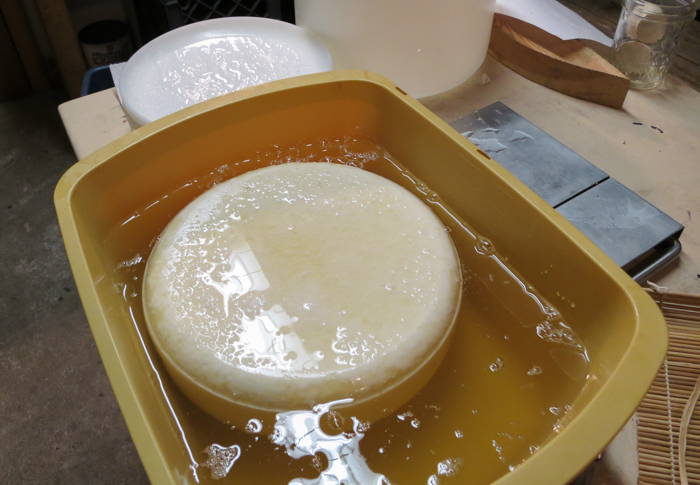
When cheese is done being pressed, it should be moved to a cool location, so the temperature can drop to the same temperature of the brine solution. Brining warm cheese increases the rate of salt absorption, resulting in over salting. Once cooled, place the cheese into the salt brine solution.
The density of the brine will cause the cheese to float, so the top surface of the cheese will float above the brine. Because of this, the top surface of the cheese will need to be salted. Simply, sprinkle a small amount of salt on the top surface of the cheese. This salt will create its own brine, as it mixes with the surface moisture from the cheese.
Half way through the brining process the cheese should be flipped and re-salted for an even brine.
Cheese of different densities and shapes will require varying amounts of time in the brine. A general guide would be one hour per pound, per one inch thickness of cheese.
A very dense, low moisture cheese, such as Parmesan, will need more time than a moist open textured cheese.
Once the cheese has been brined, it should be drained and allowed to air dry, while turning, for 1-3 days or until a firm, dry surface is observed. After drying, the cheese will be ready for waxing or the development of a natural rind.
General Information on Brining Cheese
How to Know When There is Enough Salt
A cheese brine is typically a saturated brine strength. This means adding salt until it no longer dissolves when added.
How to Replenish Salt in a Brine
When adding fresh cheese to a pre-made brine solution, always sprinkle a good amount of salt on the surface of the floating cheese. This ensures an even brine and also adds salt back into the brine solution, so no salt is depleted.
How to Store and Maintain Brine
Brine should be kept cool and be stored in an non-reactive container. Many cheese makers store brine in their cheese cave, where it is 52-54F.
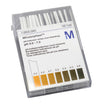
The brine should be stabilized at an acid level similar to the cheese being salted, this is typically around 5.4-4.9 pH.
Tips for Making a Fresh Brine
Fresh brine needs to have Calcium Chloride added, because low calcium in the brine will cause the calcium inside the cheese, responsible for binding the proteins, to be pulled into the brine. This will in time cause a weakening of the curd structure and a softening of the rind.
When making fresh brine, you can also add one cup of clear whey for every gallon of brine, because the whey will contain calcium. Then add salt until it no longer dissolves into the water, then just a bit more so it is saturated. This will be about 23% salt when the brine is 52-54F.
If you are measuring for a target pH, simply add a bit of citric acid until the target level is reached.
How Long Can Saturated Brine be Stored
We generally keep same brine for 1-2 years because good brine gets better with time. Also, dumping such a heavy load of salt down the drain can be hard on a water treatment system.
If the brine gets surface mold or looks cloudy, simply boil and filter it. To filter brine, we place cotton balls in a funnel then pour the brine through, to catch any debris or particles.
In Italy and France, brine is recirculated and filtered almost everywhere. When asked, some cheese makers say they can not remember ever changing the brine.