





Butter & Cultured Butter Recipe
-

Yield
1 Pound
-

Aging Time
None
-

Skill Level
Beginner
-

Author
Jim Wallace


Butter & Cultured Butter Recipe Info
History
What is Butter
Farm Fresh
Industrialized
Types of Butter
Ingredients
Total price for selected items: Total price:
Instructions
Making Butter is Super Easy
You can make better butter at home in your kitchen than you can buy in the store these days. In this recipe we'll show you the how and why as well as a few options to add a little "culture" to your life.
Essentially all you need is cream and a jar. Of course you can make it in the mixer or the blender and here I usually make it from ripened cream in the blender. Just pour the cream in, hit the stir button and wait to hear the "chugging" sound.
Start with the cream at about 50-60¡F to make butter. If its too warm, the butter will be very soft and will be more difficult to rinse and knead later on. If too cold, the fat will have difficulty consolidating.
You can start with fresh sweet cream or culture your own cream for more flavor.
-


Selecting Cream
The better your cream tastes, the higher quality your butter will be. Heavy cream is 40% butterfat and 60% milk solids and water.
The cream from Jersey cows produces the best butter because of its higher fat content milk, plus the fact that their fat is dispersed in larger globules than milk from other types of cows and tends to churn into butter more easily. This cream is deep ivory to gold when it is from pastured cows because the plants they eat have higher beta carotene, which colors the cream more than grain.
Can we use pasteurized or even ultra pasteurized cream for this? Yes, But the quality and flavor of the butter will not be the same as using fresh cream. You will probably find it to be better than what you find in the store but fresh cream is always better. The high temperature treatment, while making normal cheese making next to impossible does not affect the butter process as much since the process involves the fat and not the proteins which are damaged by heat. It may affect the flavor and yield though.
-
Fresh Sweet Cream The ideal cream is non-ultra pasteurized, high butterfat content (36-40%), organic, and from pastured cows. Jersey cream makes churning faster, due to larger butterfat globules.
Just using run of the mill cream from the store probably means that you are starting off with better ingredients than the average butter. But if you can find non-ultra heat treated cream from pastured cows, that will vastly improve the flavor.
The hardest part of making good butter is finding good cream. Most of the cream sold in this country is ultra heat treated (UHT).
The best pasteurized cream is vat pasteurized cream, which is heated to only 165¡F for 30 minutes. But vat pasteurized cream is harder and harder to find. - Cream Skimmed from Whey As I travel to visit cheese makers in Europe, I often see the whey being diverted to a separator to remove the cream for butter making. This is done before the whey is heated for Ricotta. Nothing is wasted ther. First to the cheese, then to the butter, then to Ricotta, and finally to the pigs. Nothing is wasted. This is especially true in the Parma region and in the Fontina area of Aosta in Italy.
Here, since I often use fresh Jersey milk, my whey is always rich in butterfat so I make sure the whey goes into a sanitized container when removed from the curds and then allow it to sit overnight at a cool cellar temperature. In the morning, the cream has risen plus the bacteria from the process has ripened for a cultured cream. I can then carefully skim the surface and cool to my butter making temperature. The result is a fabulous cultured butter that goes to my neighborhood "foodie" friends.
-
Fresh Sweet Cream The ideal cream is non-ultra pasteurized, high butterfat content (36-40%), organic, and from pastured cows. Jersey cream makes churning faster, due to larger butterfat globules.
-

Culture Cream (optional)
Commercial culturing is a superficial affair, so don't imagine any brand you have purchased is a model for cultured butter. Industrial butter is cultured in a matter of hours. At home, you can do much better. Unlike factories, you don't need to consider the cost of waiting for cream to ripen. And that's the secret to making extraordinary butter.
Raw cream is naturally full of desirable dairy bacteria and ferments and sours on its own, without the addition of a bacterial culture. Fermentation by lactobacillus bacteria changes the chemistry of cream, making its flavors more complex. Among other changes, it produces lactic acid, making the cream less Òsweet.Ó Culturing helps make churned cream ÒbreakÓ faster into the two products of butter making: butter and buttermilk.
To culture your pasteurized cream simply add a packet of C21 Buttermilk Culture to a quart of cream (adjust proportionately if using more/less). Butter cultures are ÒMesophilic,Ó meaning the bacteria thrive in moderate temperatures. ÒThermophilicÓ yogurt cultures require higher temperatures so are not so effective here.
Pasteurization kills all bacteria, even the beneficial natives. So, if you were to let pasteurized cream just sour naturally, you would be allowing any ambient bacteria that might be lurking, without the natural defenses to control it and the milk would simply "spoil."Bring the cream to 68-70¡F (Do not let it fall below 68¡F or above 78¡F), add the culture and keep covered and warm for the next 6-12 hours. This will totally depend on how much character you would like to see in your butter. Let your taste buds guide you on this.
After this ripening, the cream should be noticeably thicker and have a well developed aroma (buttermilk culture is often called an Aroma Culture). It should taste delicious, slightly sour, and have no aftertaste. If the cream is bubbly, or smells "off", yeasty or gassy, you have a contamination problem: throw the cream away! The problem was probably caused by one of the following:
- The milk was contaminated with other bacteria that are not of the friendly dairy types.
- The area in which the butter has been made is contaminated with yeast from baking etc.
- The cream had been stored near other items in the fridge that impart an oder that is not welcome in the butter (onions, garlic, etc)
-


Separating the Butter
Begin by warming your cream to 50-60¡F.
- Using a Jar Fill your jar 25-50% full of cream. The more cream you have in the jar the longer it takes to form butter because there's less movement of the cream and that's what makes the butter.
-
Uusing a Blender, Food Processor, or Mixer Only fill 25-40% full (otherwise life will become messy). Turn it on at a moderate speed and watch the cream change to thick cream and then begin to separate.
I use my blender on "stir" here.
It really doesn't take long, between 10-20 minutes depending on, cream, temperature, how long you let it ripen, and type of "churn."
You will next notice the sound of the moving cream changing as the cream turns from liquid to whipped cream. You will eventually notice that it will "break" as the butter separates from the buttermilk. As this happens, notice the color of the cream as well, it will start to turn more and more yellow as the butter comes together.
The butter will start clumping together.
-


Rinse the Butter
This step is very important, to keep the butter fresh. The final butter may have some lactose and milk proteins remaining in the liquid and if this is allowed to ferment, the butter may become rancid in a short time. The washing and folding is what removes most of this. Cultured butter lasts longer because this lactose has been mostly fermented out to lactic acid.
When the butter clumps well, pour the liquid off (make sure you keep your buttermilk) and move the butter to a bowl.
Add some fresh cool water and rinse the butter by pressing and folding in the bowl, do this two or three times until the water is just about clear.
-


Drain & Salt Butter
Now, pour off the final rinse water and continue to knead with a spoon until it forms a nice ball. As you knead the butter you'll notice water working out of the butter, keep draining this off as you form the butter into a ball. If the butter is too soft, put in the fridge to harden a bit before continuing.
You can add salt to your butter as your taste prefers during the final kneading. You will notice more liquid coming off if you do.
-


Press or Roll Butter
The butter you just made can now be pressed into any form you desire or rolled into a ball and wrapped or pressed into a special butter mold -for the esthetics.
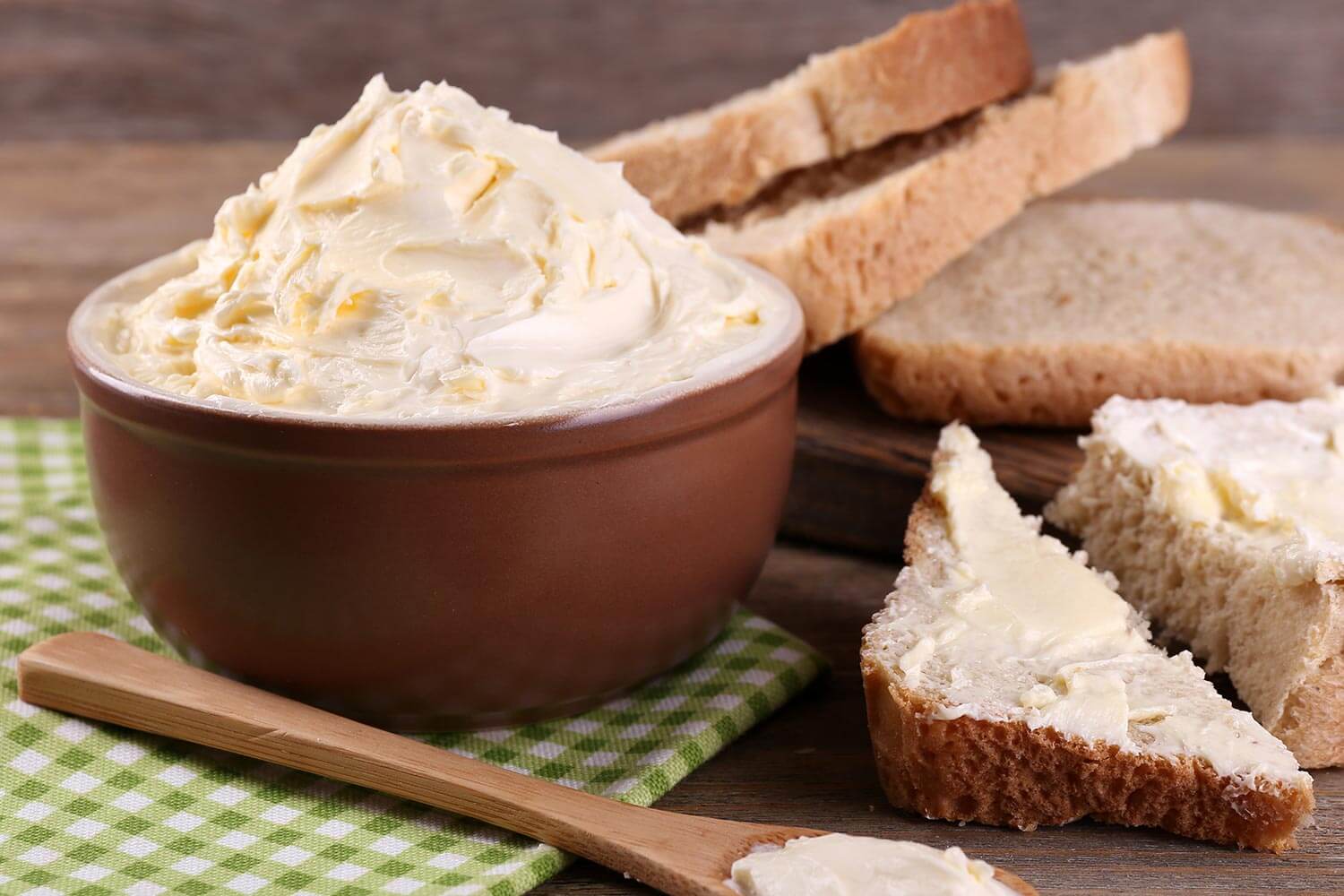
But first, cut your self a nice hunk of that great bread you have in the pantry and smear a good sized portion of this butter on and enjoy.
-

Storing Butter
Simply refrigerate the butter, or for larger batches you can freeze all of the butter that exceeds a few days' supply.
Freezing butter does it no harm because butterfat crystallizes at about 60¡F, so taking it from 35¡F in the refrigerator down to -20¡F in the freezer does not change its texture. Freezing butter will forestall the absorption of other flavors from the refrigerator and keep the butter flavor much cleaner.
In really hot countries where butter is made in quantity, like India, use clarified butter (ghee), with the last traces of water and milk solids removed to help preservation. Finally clarified butter, or ghee, is butter from which all milk solids have been removed through cooking. The resulting product is clear, rather than opaque, and it can be stored for longer periods of time than butter. Ghee is very popular in India. This can be easily made by gently heating the butter and allowing the solids to settle out while still warm. The clarified butter can then be poured off of the solids. This will also not burn when heated.
Historically, the Northern countries such as Ireland and Norway have been found to seal their butter in wooden tubs and then bury them in the bogs where it was cool and without air. Some of these are being found even today.
When migrants from Britain and other northern Europeans cooler climates arrived in warmer countries such as America they resorted to keeping butter down a well or in the "spring house" where cold ground water and evaporation kept things cooler.
After reading through this somewhat lengthy history and process of butter making you might be thinking, "Wow, I think you're is pushing the "cultured" butter thing." Yes, yes, and yes again, but, for the little bit of extra work and the response we get from my friends who love good food, Cultured Butter is well worth the time.
Cheese Making Supplies
Related Products
You May Also Like