











CheeseQueen
Logo
HomePg
EquipmentIngredientsBooksWorkshopsKits
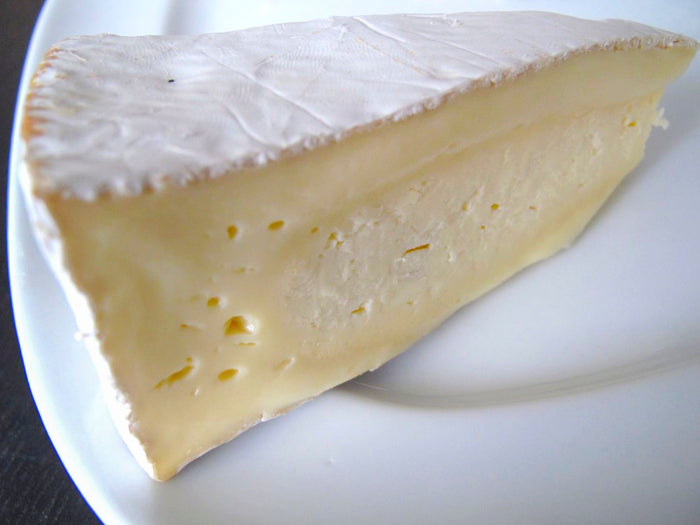
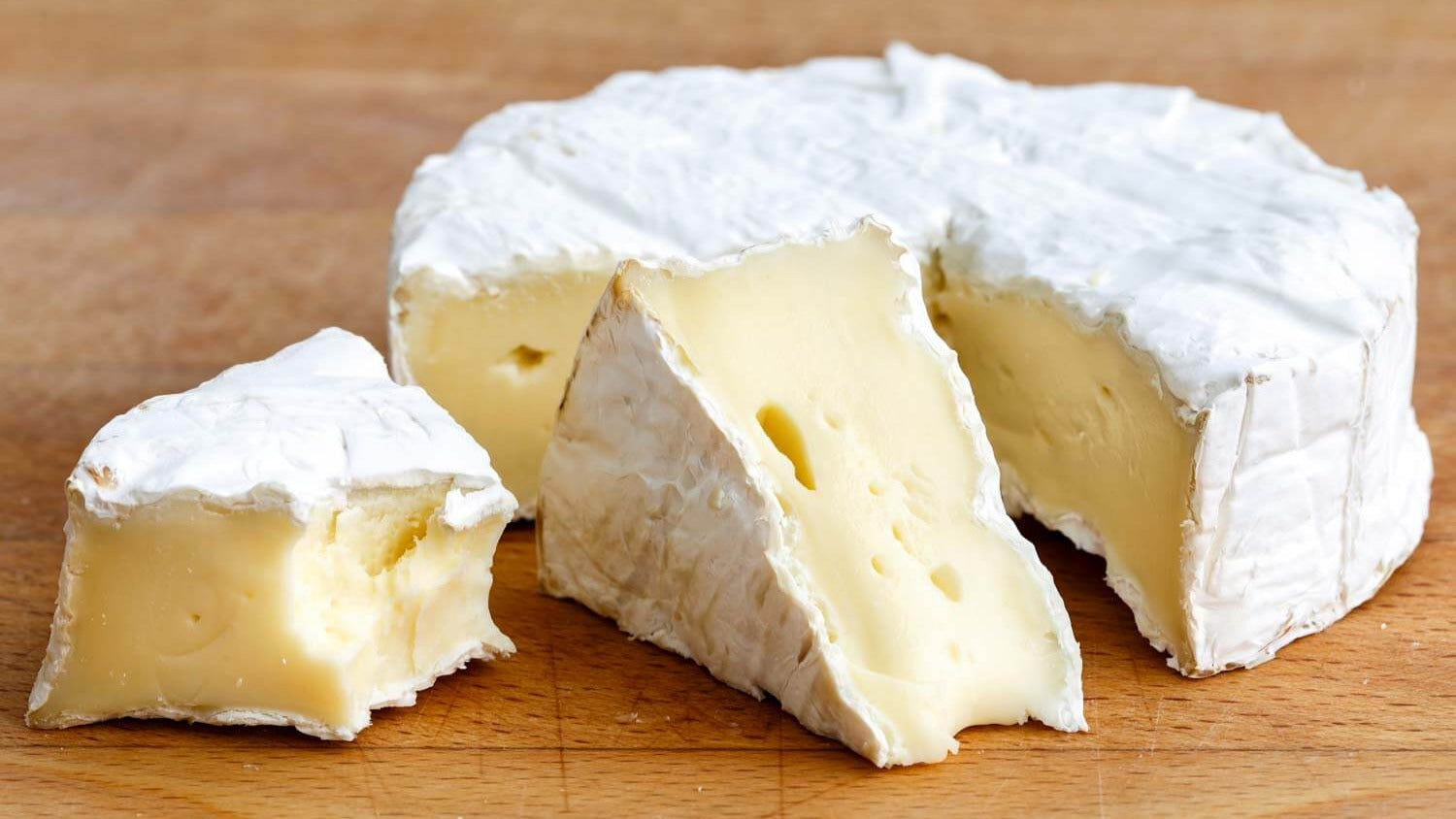
Brie - traditional style
The goal in making this cheese, is to prepare the surface for a quick surfacing
of p.candidum which will gradually give way to streaks of red developed by b.linens
The enzymes produced by this surface ripening will cause
the cheese to be transformed into a custard like consistency

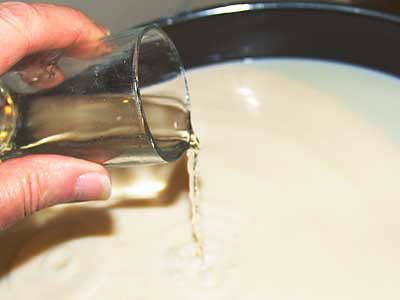
we begin by adding the starter cultures along with our white ripening mold
to the milk and then ripening for 45-60 min., at which point
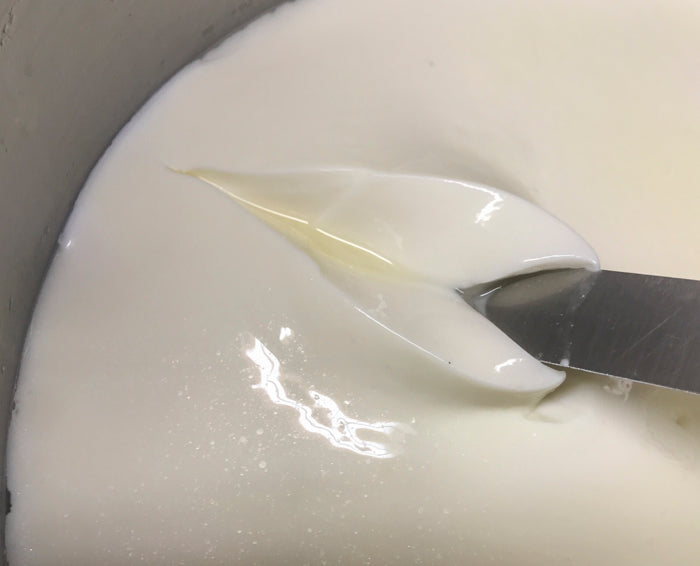
rennet is added for a final very firm curd set in 2-2.5 hours
zzzz

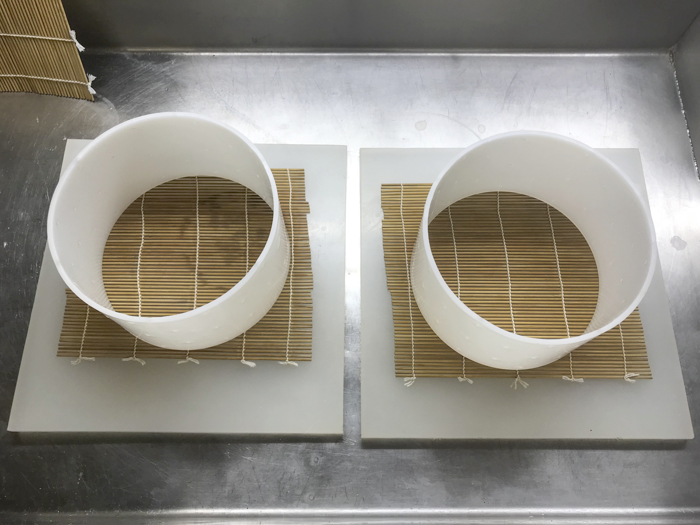
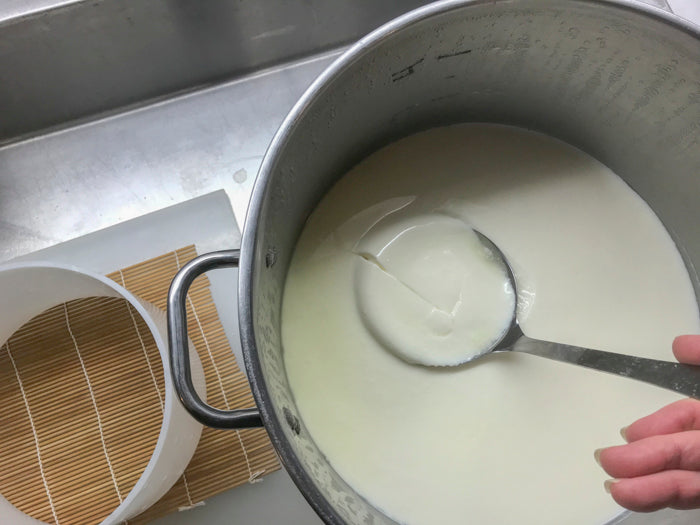
The curd will have a thin layer of whey covering it and separate from the vat when ready to cut. The molds are shown with
short strips in place
to be tightened after draining.
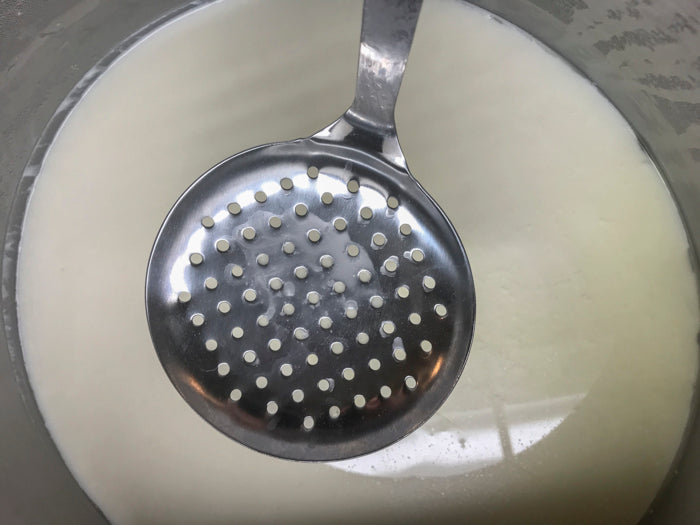
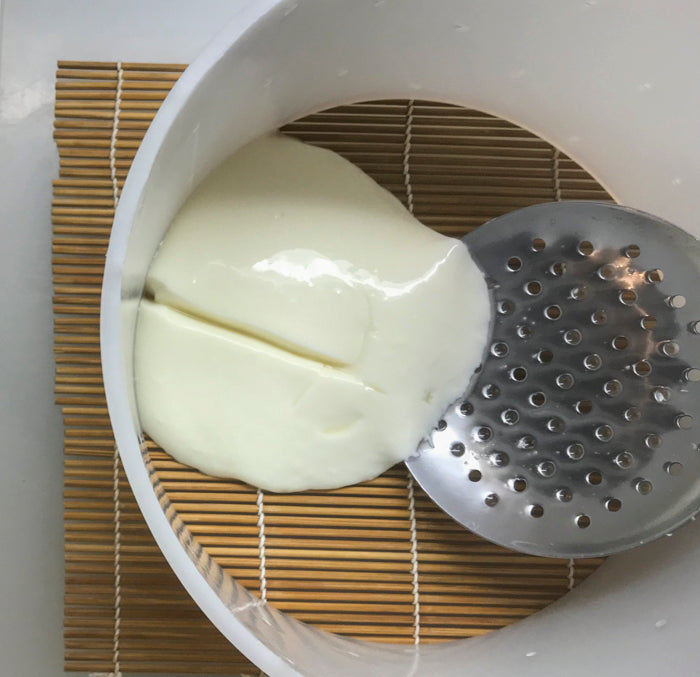
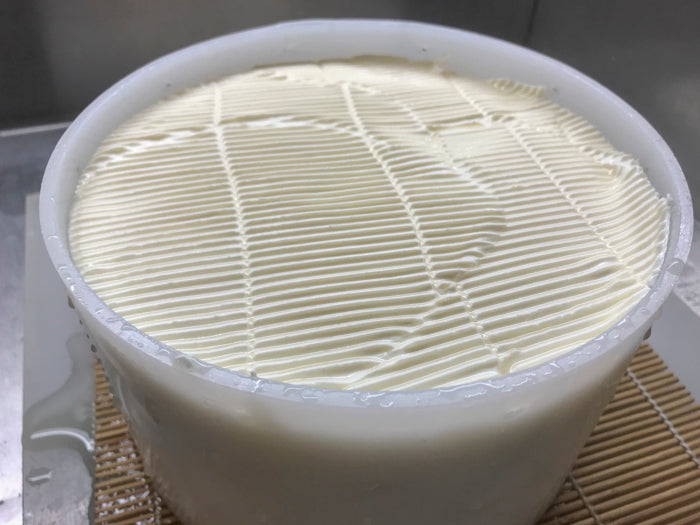
The curd is not cut but carefully ladled in thin layers into the sanitized and preheated molds...
...that have been prepared and
placed on bamboo mat. At this point the curd is still quite sweet.
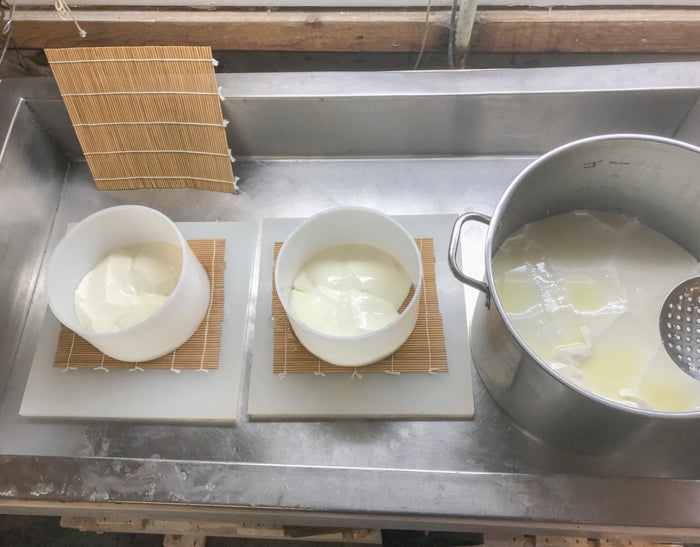
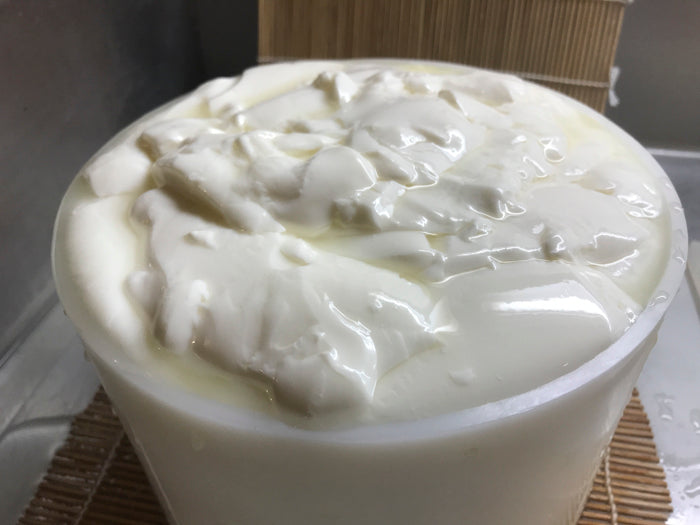
The molds are filled in succession slowly, a few ladlefuls at a time. They now need to set quietly
and drain in a draft free area...
...with a steady temp overnight.
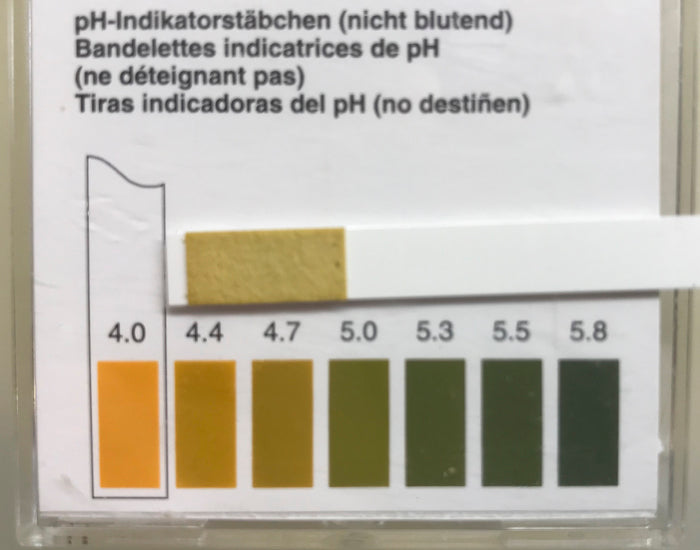
During this time our
final acidity develops
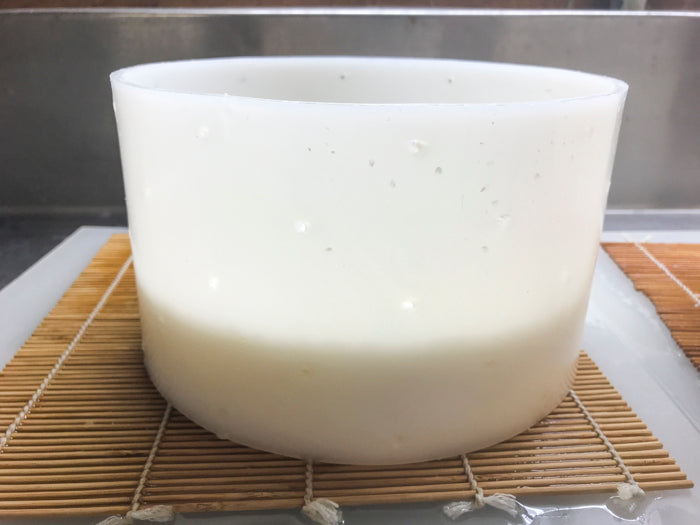
By the next morning they will have drained down to 1/3 original height.
The tall inner hoop may now be loosened and removed... ...and the shorter hoop is now tightened... ...so that it can be flipped over without breaking.
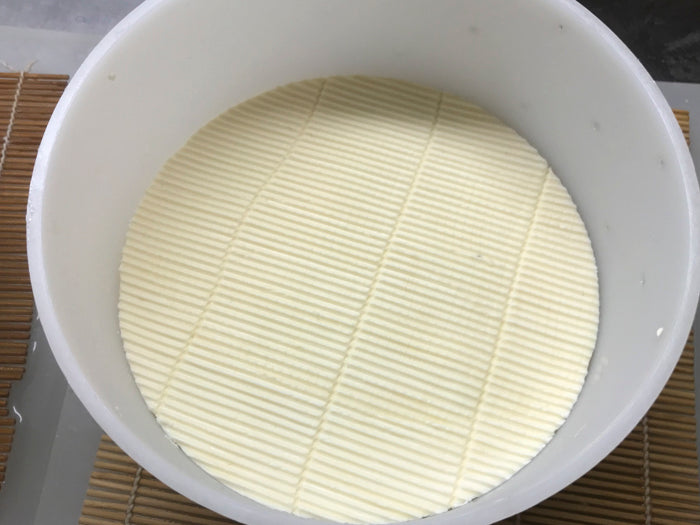
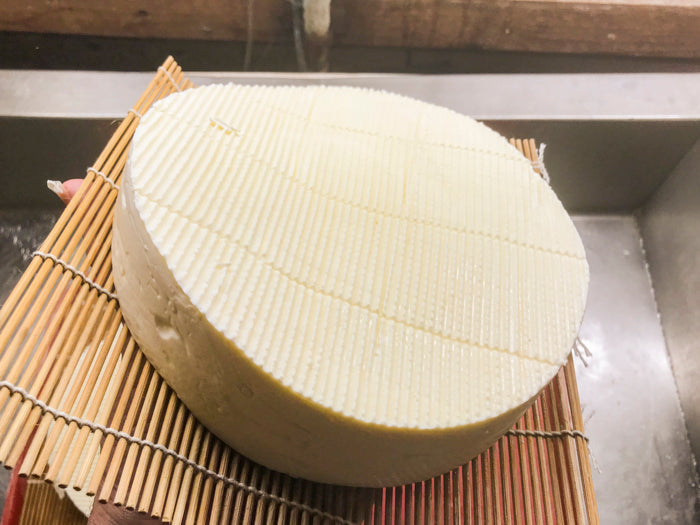
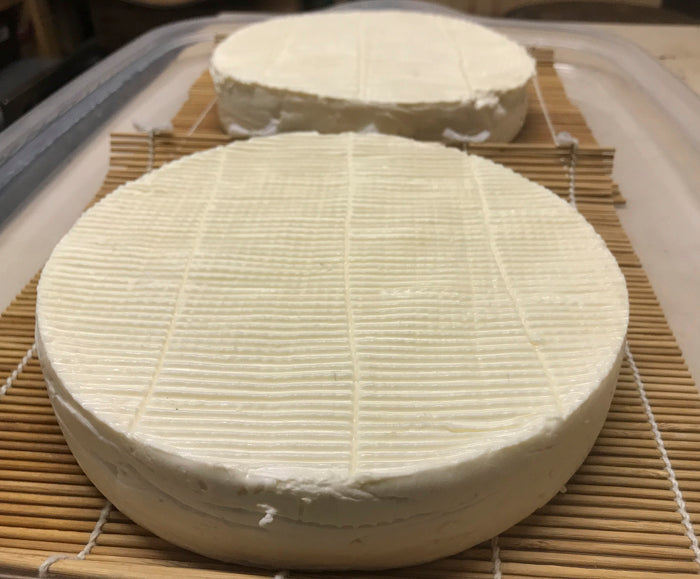
The original mat can now be gently removed leaving it's imprint.
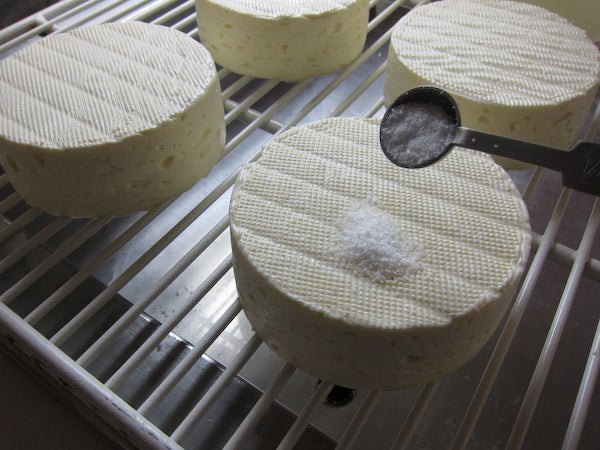
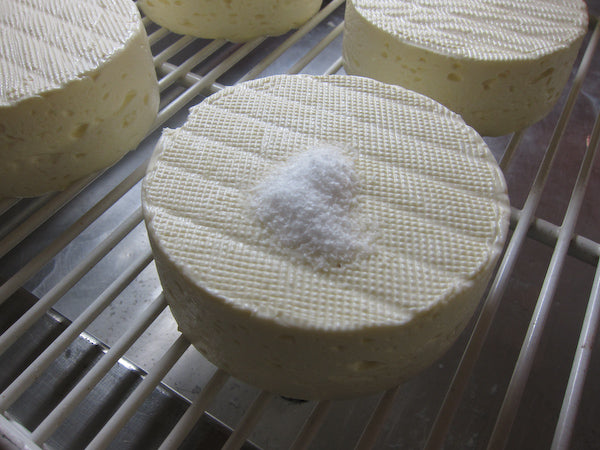
The flipping continues for the next several hours and dry salting the surfaces can be started... ...as soon as the curd
dries down and free whey
is no longer an issue.
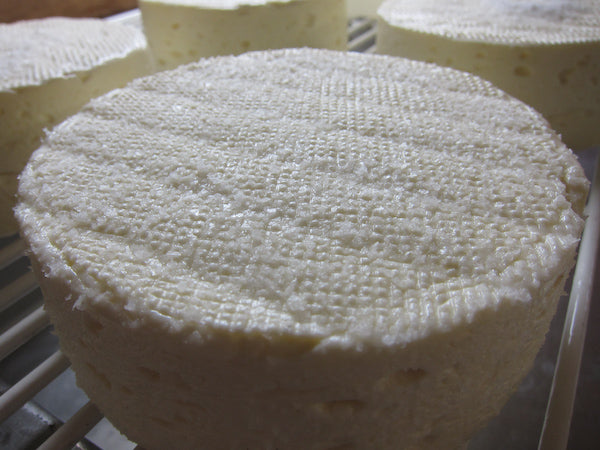
The drained and salted cheese is now ready to be moved to a space with moderate air flow...
...and the drying off continues
for the next day or so,
keeping the temp at 65F.
Following the drying off
move to 54F-90% ,
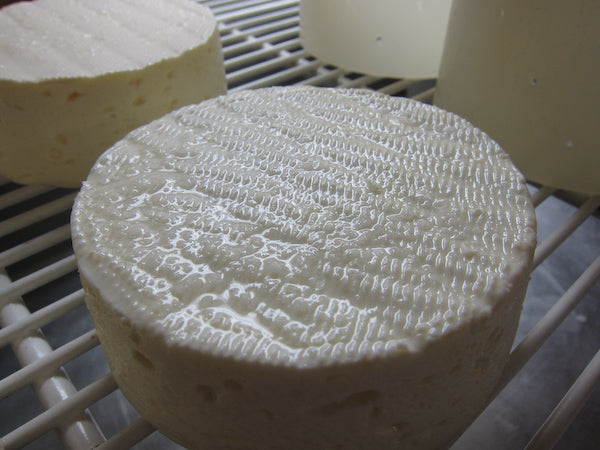
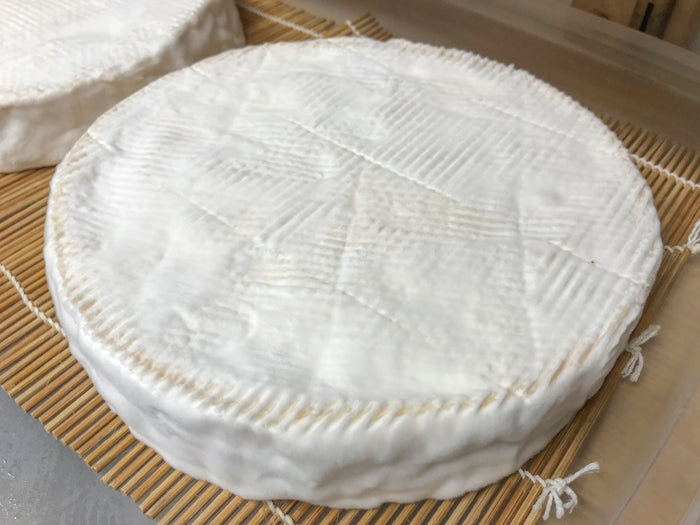
where the white surface will
begin to develop at day 5...
...and continue through
about day 10-12 when
they can be wrapped...
...and moved to a
moister and cooler space
(38-42F.. 95-97% humidity)...
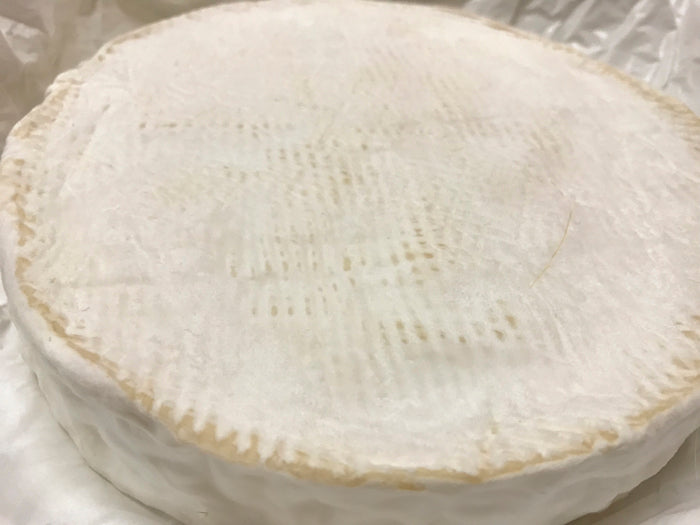
...where the white surface begins to die back and the red/yellow streaks begin to show.
At about 4-6 weeks the curd should have ripened
to at least the half way point
and it is ready to eat.
You can try it at an earlier stage when the taste is quite fresh and sharp... ...or wait until it really develops some character and the flavor deepens and shows the true flavors of the milk.