















Tomme Cheese Mold
Description
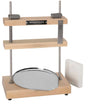
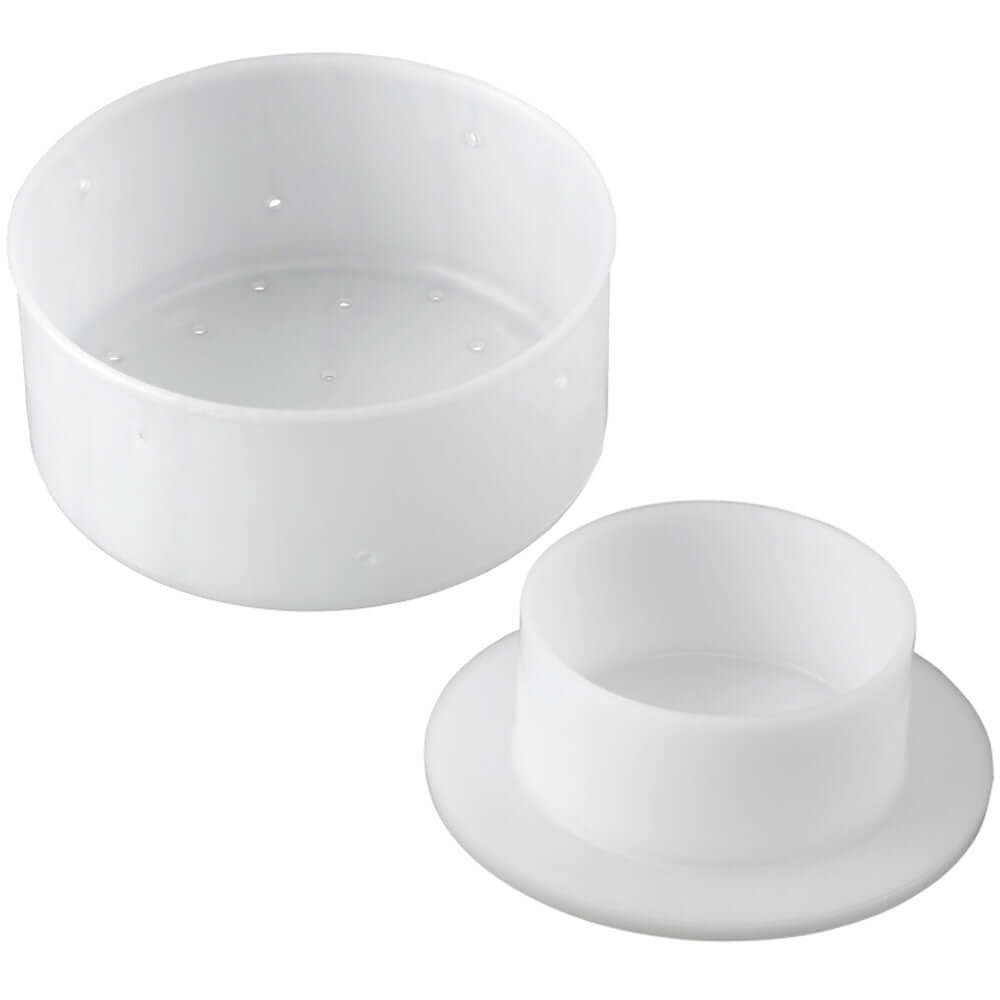
This sturdy Tomme cheese mold is ideal for Tomme style or semisoft cheese, including Reblochon, Munster, Blue, Tomme, and Trappist style cheese. Each mold comes complete with a follower for even pressing.
Small: This mold is ideal for small Tomme style or semisoft cheese including Reblochon, Munster, or Trappist style cheese. These molds are not tapered so they cannot be stacked on top of each other.
Large: The top of this mold is slightly wider than the bottom wider so several molds can be stacked on top of each other for light pressing. When using the follower, this mold will easily handle up to 100 lb of pressing weight, for a higher pressed Gruyere style cheese. Turning the cheese several times with no weight towards the end of the molding stage evens out the top and bottom diameters so it ends up with a nice little bulge in the side.
Details
Dimensions
- 1-1.5 lb | 5 1/4" W x 2 1/2" H
- 4-5 lb | 7 1/2" W x 3 1/2" H
Features
Closed bottom
Material
Food grade polypropylene
Country of Origin
France
365-Day Happiness Guarantee
Helping Cheese Makers Since 1978
Description
This sturdy Tomme cheese mold is ideal for Tomme style or semisoft cheese, including Reblochon, Munster, Blue, Tomme, and Trappist style cheese. Each mold comes complete with a follower for even pressing.
Small: This mold is ideal for small Tomme style or semisoft cheese including Reblochon, Munster, or Trappist style cheese. These molds are not tapered so they cannot be stacked on top of each other.
Large: The top of this mold is slightly wider than the bottom wider so several molds can be stacked on top of each other for light pressing. When using the follower, this mold will easily handle up to 100 lb of pressing weight, for a higher pressed Gruyere style cheese. Turning the cheese several times with no weight towards the end of the molding stage evens out the top and bottom diameters so it ends up with a nice little bulge in the side.
Details
Dimensions
- 1-1.5 lb | 5 1/4" W x 2 1/2" H
- 4-5 lb | 7 1/2" W x 3 1/2" H
Features
Closed bottom
Material
Food grade polypropylene
Country of Origin
France
Have a question? We're here for you.