


















What are Large Culture Packs
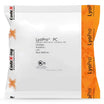
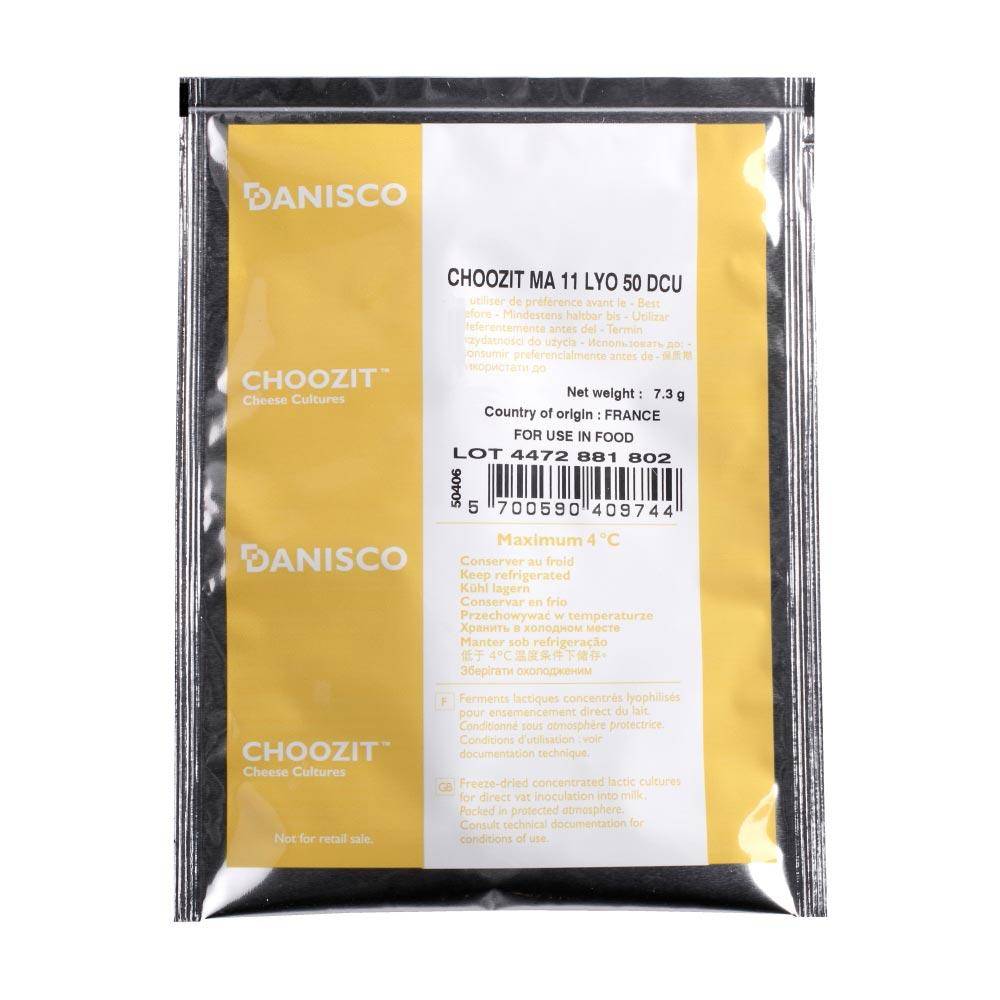
Large packets of starter culture offer a broader choice in cultures, than small culture packs, but are intended for large batches of cheese.
General guidelines, for large culture packs, provide quantity suggestion for 50+ gallons of milk. We find the culture packs can be easily divided easily for 8-10 gallons ok milk for home cheese making.
How to Measure Starter Culture
A large culture pack will set many gallons of milk. When making small batches, the proper dosage will need to be properly measured, for the quantity of milk being using and the right amount of activity for the cheese being made.
Below are two methods we use for measuring starter culture.
Measuring Culture
You can simply use a measuring spoon. Typically 1/2 tsp will inoculate 6-12 gallons of milk. This amount may vary depending on the type of culture and/or cheese being made.
When using raw milk reduce the amount of culture used by 25-50%.
Note: This is only a guideline, because setting temperature, age of milk, and the type of cheese being made will all play a roll in the amount of culture needed.
Weighing Culture
An accurate gram scale can be used to when the proper amount of culture. Large culture packs come marked in 'Units' of 10, 20, or 50. We find 1-2 units typically inoculate 10 gallons of milk, depending on milk and activity of starter desired.
The standard rate of recommended culture use is 2 units per 26.4 gallons of milk or 1 unit per 13.2 gallons of milk.
Here is an example of how we weighed and broke down a recent large culture pack
- 20 unit pack of MA011 was equal to 17.7 grams. So, 1 unit was equal to .89 grams [17.7/20]. This determined the rate of Utilization Ito be 1 unit for every 10 gallons of milk.
- The batch of cheese was 18 gallons of milk. Here is how we calculated the proper amount of culture. .89 (weight of 1 unit culture) x 18/10 = .89 x 1.8 = 1.6 grams of MA011 to inoculate 18 gallons of milk.
We suggest doing your own tests to find the proper utilization rate for your milk.
A Few Types of Large Culture Packs
This is the mesophilic culture to use when you want a clean cheese flavor and a very close curd texture.These mesophilic cultures will provide the essential acidity without gas production sometimes referred to as homofermentive.
Ideal for semi-soft and fresh cheeses such as: Cheddar, Colby, Monterrey Jack, Feta, Chevre, etc.
Contains
- Lactococcus lactis subsp. lactis
- Lactococcus lactis subsp. cremoris
These are two primary lactic acid producing bacteria used for cheese making They are Homofermentive bacteria, primarily used for producing lactic acid.
Temp growth range is 10° - 42°C (50°- 102° F.) with an Optimum growth rate = 25° - 30°C (77°- 88° F.)
Cremoris is more salt sensitive [<4%] and more temperature sensitive [<40°C/102°F]
This is a great choice for any of the cheeses made with MA011 but with the added thermophilis will aid in the ripening process.
This is what is commonly referred to as the 'Farmstead culture.' It is predominantly a blend of standard mesophilic lactic acid cultures similar to MA 011 to develop the primary acidity. It also contains a S.thermophilis which will serve as a ripening culture a bit later in the process. The Mesophilic cultures will produce the acidity during the first part of the process. Then, after the cheese is salted and in the cave, the Thermophilic cultures begin to work in a ripening capacity to break down the complex proteins into simpler components for flavor.
Contains
- Lactococcus lactis subsp. lactis
- Lactococcus lactis subsp. cremoris
- Lactococcus lactis subsp. diacetylactis
- Streptococcus thermophilus
This is the mesophilic culture to use for a more pronounced butter like flavor and a somewhat more open texture.
Another Mesophilic culture for soft ripened, and fresh cheeses such as: Brie, Camembert, Gouda, Edam, Blue, Feta, Havarti, Chevre, etc.
This culture contains the 2 primary cultures of MA011 but the diacetylactis will produce CO2 and a butter like flavor/aroma. Cheese made with this culture will be somewhat more open in texture and in a cheese such as gouda/edam will provide the typical small round holes.
Contains
- Lactococcus lactis subsp. lactis
- Lactococcus lactis subsp. cremoris
- Lactococcus lactis subsp. lactis biovar diacetylactis
This culture works at higher temperatures (Thermophilic) for hard mountain style cheeses such as Emmenthaler and Gruyere etc.
It is often used in combination with other thermophilic cultures such as:
- Lactobacillus delbrueckii subsp. bulgaricus
- Lactobacillus helveticus
- Lactobacillus delbrueckii subsp. lactis
The typical yogurt cultures are a blend of Streptococcus thermophilus and Lactobacillus delbrueckii subsp. bulgaricus.
It can also me mixed with other Mesophilic cultures such as in the MA4002 where its work is then done primarily in the aging room.
This culture will work optimally in the 108-112F range.
Contains
- Streptococcus thermophilus
This culture is usually used with other mesophilic cultures to enhance flavor (buttery) and produce some small eyes in fresh and soft ripened cheese such Edam or Havarti. We suggest you use it as a flavor enhancer for your cheese.
Used in combination with other mesophilic cultures this culture is a very slow acid producer and is usually not used by itself but in combination with other mesophilic cultures such as MA 011.
This culture is used to enhance flavor (buttery) and produce some small eyes in cheese such Edam or Havarti. Suggest use as a flavor enhancer for your cheese.
It is often used to provide more openness in Blue cheese due to it's gas production.
Contains
- Lactococcus lactis subsp. biovar diacetylactis
Using this in conjunction with MA 011 it will be similar to MM 100 but you will be able to control the flavor and gas producing aspects to your satisfaction by increasing or decreasing the amount of MD 088 used.