










Cheesy humor to brighten up your day. These tidbits are from books, around the web and fellow cheese makers.
Check out the Price, We Have Come a Long Whey
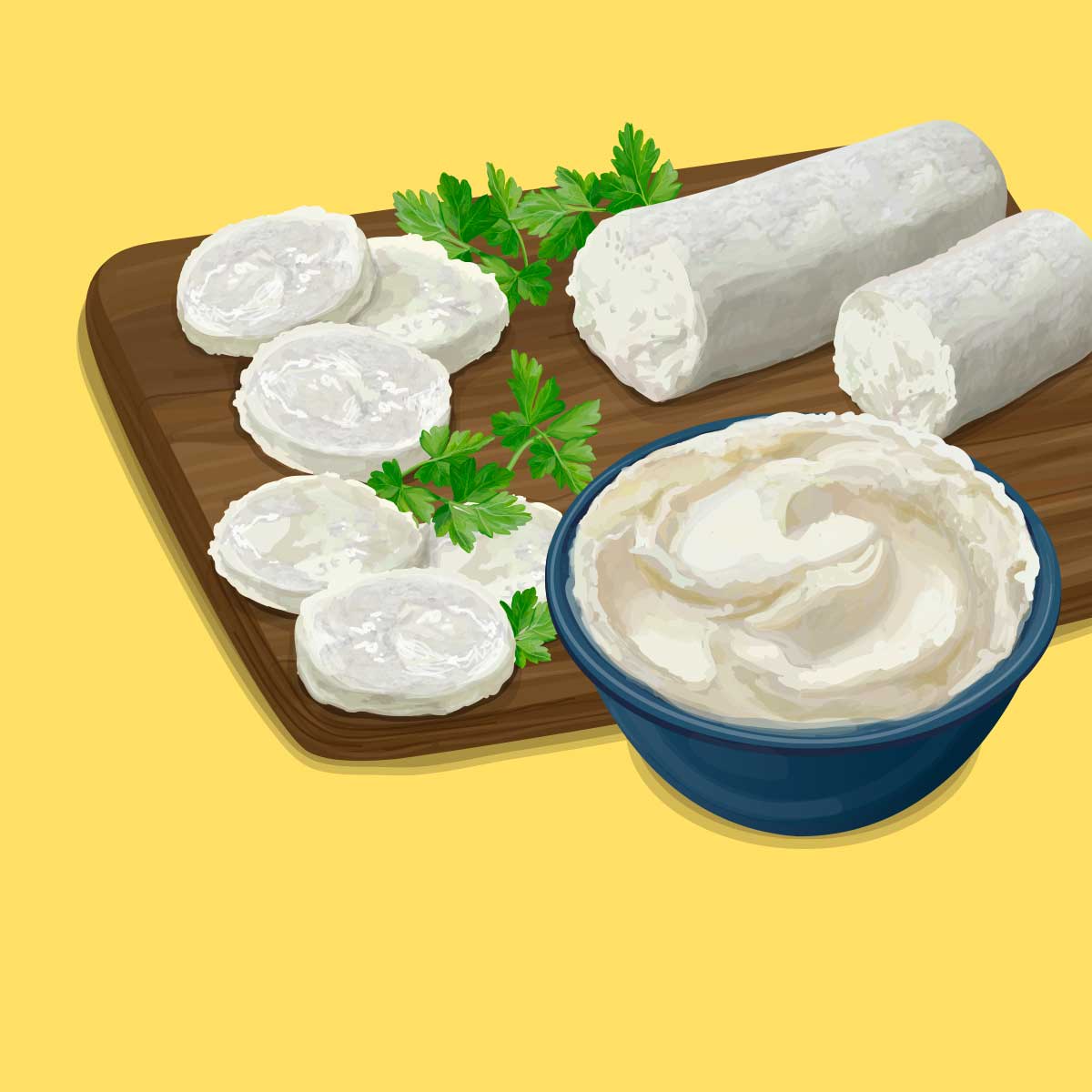
Considering the market today for America's delicious goat cheeses here is a cute quote from 'The Cheese Book' by Vivienne Marquis and Patricia Haskell, written in 1964.
"Ironically, the poor man's cow produces some of the world's most expensive cheeses. Even in France, which produces more than two thirds of all the goat cheeses, they are generally regarded as luxury cheeses. Still, nowhere in the world are the prices of goat cheeses as high as they are in the Untied States. At this writing the three of four goat cheeses available in New York's most reliable cheese store cost $2.50 or more a pound-and are selling very well."
A Floating Olive
How to tell if your brine is ready? Well how about this little goodie...an olive floats in water when there is enough salt in it.
A Gouda Little Play on Words
Here is an email which was sent back and forth a few times from Denise in Brooklyn and Ricki Carroll aka The Cheese Queen. If you can think of any more send them to us.
Denise - Please send me your latest brochure...
Ricki - it's on the whey!
Denise - Thank ewe!
Ricki - I love it, that is one I never thought of-so thank ewe too!
Denise - You are moo-oooocho welcome!
Ricki - how about sending me the list so I can put this online?
Denise - I am utterly flattered!
Ricki - and I can not wait, this may be the start of a whole new dairy culture!
Denise - especially if it is in Monterey, Right, Jack?
Ricki - you are very gouda at this-I am really waiting for the hole list.
Denise - I will consider it a fetacommplis if I can keep this going.
A Roquefort Legend
According to legend, Roquefort was discovered centuries ago, possibly before the Christian era. The legend has it that a shepherd boy in the rocky country of the Causses left his lunch of bread and ordinary curd cheese in one of the cool caves of the district, thinking to come back for it later in the day. But it was weeks before he returned to find his abandoned lunch. Then, with the morbid curiosity of those who cannot throw anything away without peeking first, he looked, and smelled, and then he tasted. At which there may well have followed one of the greatest Aha's in gastronomic history.
In any event, thousands upon thousands of Roqueforts have since been made by inoculating the cheese curd, made from sheep's milk, with Penicillium roqueforti-a mould-producing substance made from rye bread crumbs-and ripening it in the damp, cool, drafty limestone caves that are peculiar to the district. Other blue cheeses may be made with sheep's, goat's, or cow's milk-chiefly the latter-or a mixture of all three, and ripened in a variety of ways, but the use of the mold-producing penicillium is almost universal. And since 1411 when Charles V1 issued a decree restricting the name Roquefort to the cheese made in the Roquefort district of the Causses, no other "bastard cheese made in bastard caves" (as the people of Roquefort jealously referred to their competitors' products) could be called Roquefort.
Osbert Burdett gives the clearest picture of the caves here:
These caverns end in a natural cleft, which communicates, like a chimney, with the open air. As this upper air is cooler than that in the caves, presumably from the presence of hot springs in the rock, a current of air, humid and cool is available in these naturally warm cellars which enables the cheeses to ripen without evaporation.
Proved that, when the fame of Roquefort had nursed a great industry for export, vast cellars, often several floors deep, were excavated and tunnels made to the ventilating shaft, to multiply the advantages of the caverns. With Roquefort, in sum, the conditions for ripening are more important than the method of making the curd.
It is these caves that makes the difference, that are the reason Roquefort-probably the most imitated cheese in the world-has never been duplicated.
Bibles and Cheese
I found this story amusing, but who knows...anything is possible.
In Olney Texas what began as a mission to spread the Gospel ended up as a lesson in free enterprise for the natives of Detshino, Russia. Eleven people form North Texas extended their beliefs and a warm hand by taking 2,300 Bibles and the technology to produce cheese to the poor agricultural area in May 1992.
Their goal was to teach them cheesemaking and to love God. Teaching the people of Detchino to make cheese was not the groups first priority.
The idea for the trip began when a couple heard a professor from the University of Leningrad talk about BC
The professor told of how she asked her superiors the meaning of BC and they said Before Christ, she then asked, who is Christ, they answered, Some mythical character.
The man was so shocked when he heard the story the poor guy almost fell right out of his chair. He decided right there and then he needed to do something about this. With his wife they come up with the idea of sending Bibles to Russia. The idea spread and the town unofficially adopted the town of Detchino. He wanted to reach out and touch someone to make a difference in their lives.
He decided to put a Bible in every home in Detchino. They started communications with the town and one thing led to another over they went with the New Testament.
Now the people of this town did not only want the Bibles, they wanted some expertise in agriculture, they wanted to learn to make cheese! You see Detchino is a farming community with about 900 dairy cattle and a small community college.
Well this was a problem, who could they find to teach these people how to make cheese? So a group formed to bring over the Bibles, and alas the week before they left the mans wife met Bryan (Doc)Stine of Wichita Falls, who worked for Kraft Cheese Company for 42 years. Although he was retired Stine agreed to go with he group.
Stine had been to Russia before, and under communism the milk produced was sent to Moscow. Without the communist system they did not know what to do with all their milk although they did have all the equipment they needed except for a cheese vat.
The joke was when they arrived they made the cheese in a bathtub! Stein was a world expert on cheesemaking, had made 96 trips to Europe to help set up cheese factories. Stine proceeded to show the townspeople the step-by-step cheesemaking process and made about 60 pounds of cheese.
Stine said there are 8,000 varieties of cheeses in the world and what he was showing them was new. He seemed to think that Detchino had some of the worlds worst conditions for cheesemaking, but that did not stop him. Instead Stine drew up plans for a cheese factory and made plans to return once the converted barn was readied to make cheese.
Stine seemed to think that the average person in the country was better off under communism because they now just do not know what to do and they do not know anything about free trade.
The group planned to return with a cheese vat and to show the villagers how to market their cheese. (Well this was in 1992, I do not know what has happened since, but I suppose the group is now happy with their Bibles and their cheese.
A 17th Century Ode Comparing Brie to The Moon
Comparing Brie to the moon Brie is often likened to the moon because it is so white, so large and round, and thin as men in bygone ages imagined the moon to be. An excerpt from the 17th Century ode by St. Amant, known in France as the poet of good living:
Brie alone deserves that we
Should record her praises in letters of gold.
Gold, I say, and with good reason
Since it is with gold that one must compare
This cheese to which I now pay homage.
It is yellow as the gold worshipped by man,
But without its anxiety
For one has only to press it with one's fingers
For it to split its sides with laughter
And run over with fat.
Why, then, is it not endless
As indeed its circular form is endless?
And why must its full moon, eternally appealing,
Wane to a crescent?
Cheese in a Fir-Tree Basket... Hiding From Dracula
This is from Romania
Roman ancestors, the Dracians, lived in a small piece of heaven. Their land with its huge mountains, covered by woods and grasslands was the ideal place to raise sheep.
But so much beauty and richness attracted roman emperors and only mountains and the woods were a refuge in front of invading armies.
Decebal, the king of the Dracians, retired along with his people in the mountains, taking with them the sheep flocks. In the fir-tree woods he taught them how to preserve cheese in fir-tree bark. and how to hide it in caves.
This habit passed along generations and was very much used in Vlad Tepes time, known as DRACULA His cruely and severity made many people take refuge in the mountains around his castle in Bran, and of course cheese in fir-tree bark baskets was the perfect food for them. This way of preserving cheese by burying it is even used today.
Cheese is made only of sheep milk and the basket is made of fir-tree bark boiled in whey in a very specific manner.
This cheese has all the flavor and freshness of the fir-tree woods. It's natural elements assure a longtime health and good shape.
Excerpt from Patrick Rance, Repaying The Soil Organically
From the forward by Patrick Rance in the book 'Cheeses of the World' 1993.
In the New World, cheese makers introduced Old World cheeses and also established native originals. The traditional artisanal cheeses are a different class of food from modern industrial products. The later are tailored to mass-trade convenience, rather than to customers' requirements. The difference, and the lessons learned, should be studied in those parts of the world where mistakes made in the West can still be avoided. They begin literally at the grass-roots level.
Industrial cheese makers (with some Fench exceptions) disregard healthy tradition in farming and dairy. New wave and surviving traditional cheese making farmers constantly repay the soil organically the goodness used up by grazing beasts and hay making. Their permanent grassland can harbour fifty or more native plant species, ensuring disease resistance, and a longer productivity as the various species follow each other throughout the season. As with vines and wine, the older the pastures, the richer the cheese in bouquet and flavor. Higher yield is stimulated by close grazing: not only by manure and the benefits of grazers' feet to the tilth, but the growth stimulant in their saliva as the tackle the first three inches of plant shoots. This can raise yields by one seventh, and gives the animal the most nourishing part of the plant. There are two basic reasons for cheese makers to keep the tradition on the farm. First, multi-species permanent pastures yield milk for vintage cheese; their variety is good for the animals, and the animals love it. (One and two species is the bovine equivalent to junk food).
Second, the entire structure of local character, aroma, flavor, and healthy bacterial balance in milk and cheese is undermined by chemical fertilizers and sprays: "Soils have an enormous influence on pastures, but it has been largely obliterated by modern grassland management." Chemicals destroy much of the bacterial, insect and worm population that nourish and aerate the soil, which is thus affected. This discourages deep root penetration of legumes whose rhyzomes naturally entrap nitogen for themselves and plant neighbors.
Organic farming cherishes soil life, enriches the earth and perpetuates the healthy balance and variety of local species. Soil bacteria and minerals are transmitted via the plant oils into the body fat and mammary glands of the grazing animal along with the plant's aromatic esters. They pass with the milk fat into the cheese, provided the milk is used raw, and the fat is not removed.